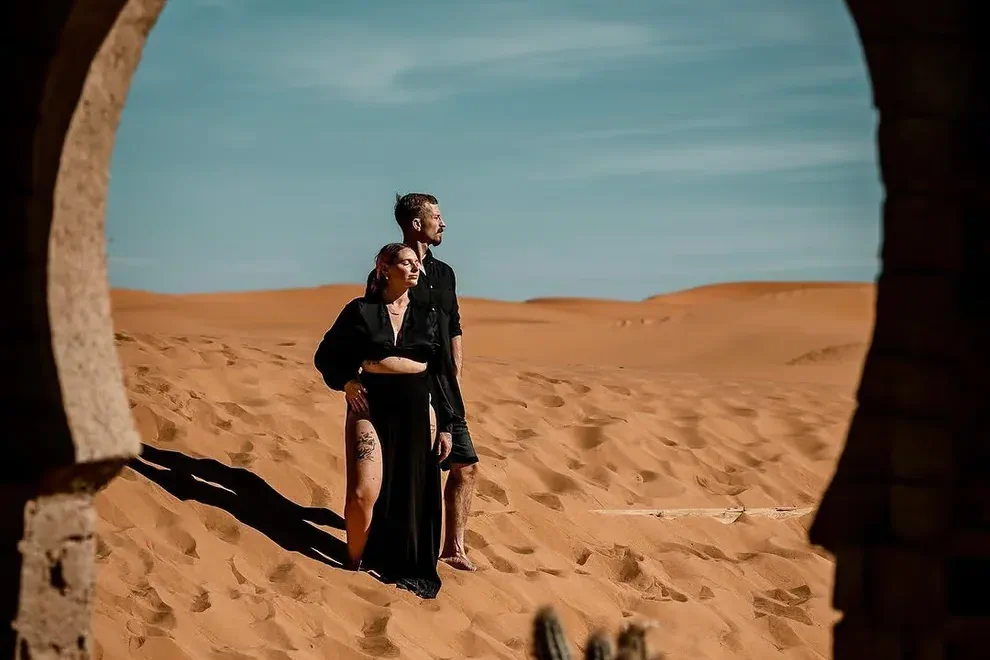
Updated November 2026 · By Shadi, 6 years in travel & tourism
The best Morocco honeymoon itinerary takes 8 to 10 days: Marrakech’s riads and medina, the Atlas Mountains, a night in a luxury camp in the Sahara at Merzouga and a private dinner under the stars in the Agafay Desert.
This guide is written for American couples. It gives you a 10-day plan, day by day: a first day to recover from the flight, the road over the Atlas to the dunes, slow days back in Marrakech and a last night in the desert, close to the city. You will also find how to get there from the USA, where you will stay, the best time to go and how the price works.
Key Details
- Ideal length: 8 to 10 days, with a rest day after the flight.
- Getting there from the USA: via Casablanca or a European hub, then on to Marrakech. From the USA, flights are quoted separately.
- Best time: spring and autumn; in winter, mild sunny days and cold desert nights.
- Budget: on quote, with flights from the USA quoted separately.
- The route: Marrakech, the High Atlas, the Dades Valley, the Sahara at Merzouga, Ouarzazate or Skoura, and the Agafay desert.
Table of Contents
Is Morocco Good for a Honeymoon?
Yes. A Morocco honeymoon gives you several trips in one: a walled medina full of colour and quiet courtyards, mountain roads and earthen villages, golden dunes in the Sahara, and a stone desert close to Marrakech where you can dine alone under the stars. For American couples, it feels a world away from home, yet every part of it can be arranged privately, with your own guide and your own driver.
What makes Morocco work so well for newlyweds:
- Variety without stress. City, mountains and desert in one trip, with a private driver-guide for the long roads.
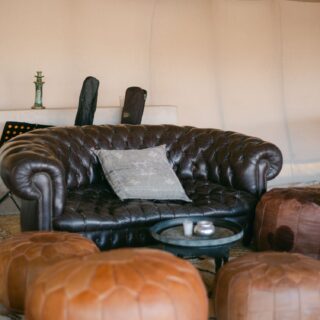
- Intimate places to stay. Riads with only a few rooms around a courtyard, kasbahs in the valleys and luxury desert camps with private tents.
- Romantic moments. A camel ride into the dunes at sunset, sunrise over the Sahara, a candlelit dinner in the Agafay desert.
- A private pace. There is no group to wait for, so you stop for a view, a mint tea or a photo whenever you like.
The one thing to plan with care is the pace. Morocco is bigger than many couples expect and the Sahara is far from Marrakech, so a good Morocco honeymoon itinerary leaves time to rest between the long days.
How to Get to Morocco from the USA
Your honeymoon starts in Marrakech. From the USA, you reach it via Casablanca or a European hub. Routes and schedules change with the season and the airline, so we check the options for your departure city and your dates instead of giving a fixed route here.
- Flights from the USA to Morocco: via Casablanca or a European hub, then on to Marrakech.
- Price: from the USA, flights are quoted separately from the trip itself.
- Arrival: a private driver meets you at the airport and takes you to your riad.
- Jet lag: keep Day 1 as a rest day. After a long journey, a quiet afternoon in a courtyard is worth more than a tour.
Before you book, read the latest U.S. State Department travel advisory for Morocco, the official source for American travelers.
Your 10-Day Morocco Honeymoon Itinerary
This Morocco honeymoon itinerary runs in one direction: first the city, then the mountains, then the Sahara, and back to Marrakech for slow days and a last night in the desert. Days 2 to 9 follow the route of our Marrakech & Sahara Honeymoon, a private journey with your own guide in the city and your own driver-guide on the road.
| Day | Plan | Night |
|---|---|---|
| Day 1 | Arrival in Marrakech and a rest day for jet lag | Marrakech |
| Day 2 | A private guided day in Marrakech | Marrakech |
| Day 3 | Guided day trip: the Atlas Mountains and the Ourika Valley, or Essaouira | Marrakech |
| Day 4 | Over the High Atlas, via Aït Ben Haddou, to the Dades Valley | Dades Valley |
| Day 5 | Todra Gorge, Khamlia and a camel ride into the dunes | Luxury camp in Merzouga |
| Day 6 | Sunrise in the Sahara, then west | Ouarzazate or Skoura |
| Day 7 | Back to Marrakech over the Atlas | Marrakech |
| Day 8 | A slow day: hammam, gardens and souks | Marrakech |
| Day 9 | A free day and a rooftop dinner | Marrakech |
| Day 10 | A private night in the Agafay desert (optional, on quote), then departure | Agafay desert |
Day 1: Arrival and a Rest Day in Marrakech
Your private driver meets you at the airport and takes you to your riad. Keep the day for yourselves: sleep, a mint tea in the courtyard, a swim if your riad has a plunge pool. In the evening, a quiet dinner is all you need. After the journey from the USA, this first slow day sets the tone for the whole honeymoon.
Day 2: A Private Day in Marrakech
Walk the medina and the souks with your own guide, then visit the palaces and gardens of the city at your own pace. In the evening, walk to Jemaa el-Fna, the main square, when the food stalls and musicians take over.
Day 3: The Atlas Mountains or Essaouira
Choose your guided day trip: the Atlas Mountains and the Ourika Valley for mountain air and village life, or Essaouira for the sea breeze and the old town on the coast. You are back in Marrakech for dinner.
Day 4: Over the High Atlas to the Dades Valley
Your driver-guide takes you over the High Atlas by the Tizi n’Tichka pass. Stop at Aït Ben Haddou, a fortified earthen village on a hillside, then continue to a kasbah in the Dades Valley for the night.
Day 5: Todra Gorge, Khamlia and the Merzouga Dunes
Walk through the Todra Gorge between its high rock walls, listen to Gnawa music in the village of Khamlia, then ride a camel into the Erg Chebbi dunes at sunset. Tonight you sleep in a luxury desert camp in Merzouga, in a private tent with its own bathroom. After dinner, step away from the camp lights and look up at the stars. Our Merzouga desert guide explains what to expect in the dunes.
Day 6: Sunrise in the Sahara
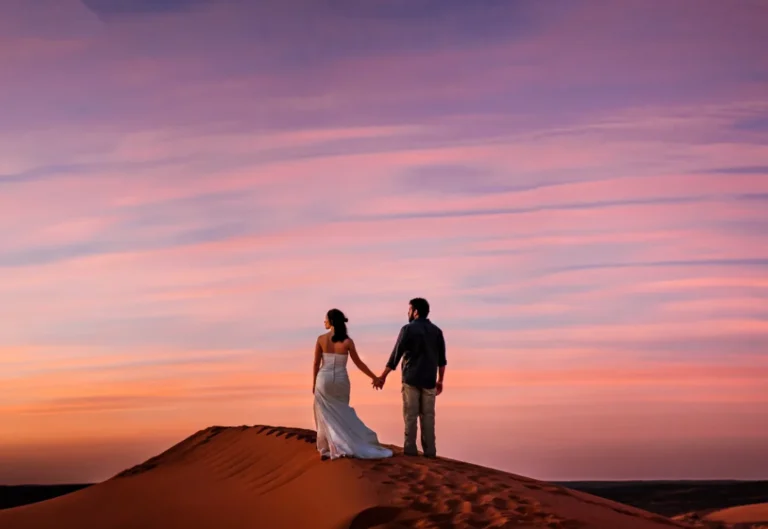
Wake up early to watch the sun rise over the dunes as the sand changes colour. After breakfast, try sandboarding and a 4×4 drive in the desert, then head west to a kasbah in Ouarzazate or Skoura.
Day 7: Back to Marrakech
Cross the Atlas again and arrive in Marrakech in the afternoon. Settle back into your riad and enjoy a relaxed dinner in the city.
Days 8 and 9: Slow Days in Marrakech
After the road trip, take two slow days. Book a hammam for two (on quote), wander the gardens, shop in the souks for lanterns and rugs, or simply stay by the pool. On your last evening in the city, have dinner on a rooftop as the sun sets over the medina.
Day 10: A Night in the Agafay Desert, then Departure
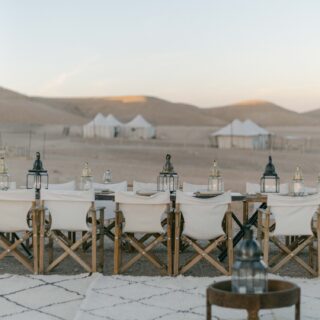
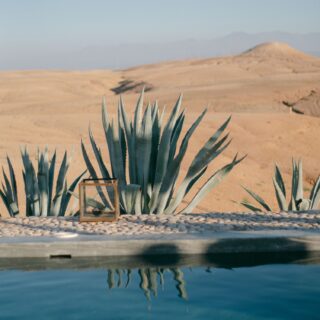
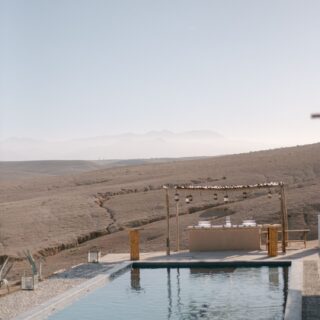
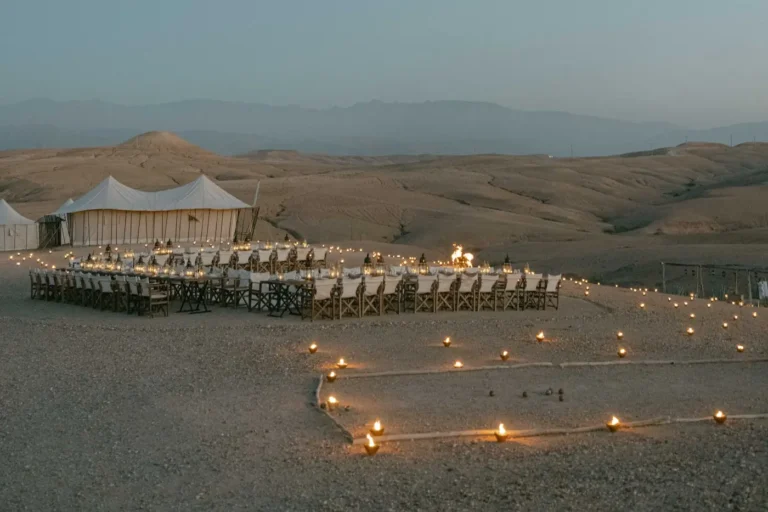
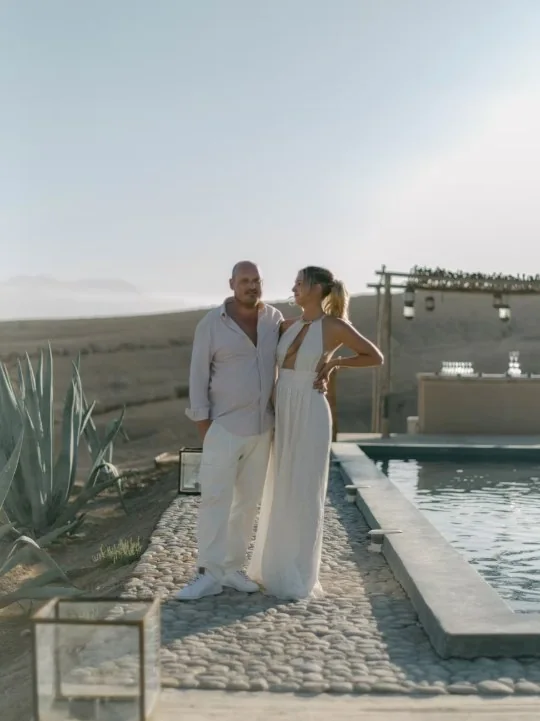
End your honeymoon 40 to 50 minutes from Marrakech, in the Agafay desert, a landscape of stone hills with the Atlas Mountains behind. Watch the sunset, share a private candlelit dinner under the stars and sleep in a luxury camp. The next morning, your driver takes you to the airport. This last night is optional, on quote. Read our Agafay desert guide to see what it is like.
Riad, Kasbah and Desert Camp: Where You Will Stay
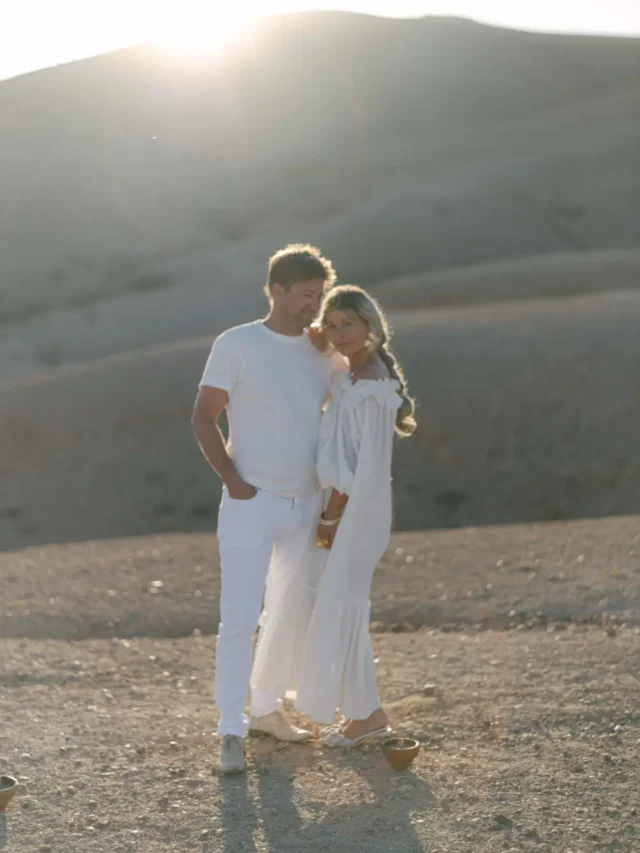
This Morocco honeymoon itinerary is also a journey through different ways of staying. Each night is chosen for its setting and its privacy:
- A riad in Marrakech. A traditional house built around a courtyard, often with a plunge pool and a roof terrace. Riads are intimate, with only a few rooms, and you step straight out into the medina. If you prefer more space, gardens and a large pool, a 5-star hotel outside the medina walls is the alternative.
- A kasbah in the valleys. In the Dades Valley and in Ouarzazate or Skoura, you sleep in a kasbah, with earthen walls, terraces and views over the valley and the mountains.
- A luxury camp in the Sahara. In Merzouga, a private tent with its own bathroom and a real bed, dinner at the camp and the dunes all around you.
- A camp in the Agafay desert. Close to Marrakech, for a last private night: candlelit tables, a fire and the Atlas Mountains on the horizon.
Best Time for a Honeymoon in Morocco
The best time for a Morocco honeymoon is spring, from March to May, or autumn, from September to November. These are the most comfortable seasons for every stage of this Morocco honeymoon itinerary: the city, the mountain roads and the desert.
- Spring and autumn: the easiest months for walking in the medina and for the long drive to the Sahara.
- Winter: mild sunny days, but cold nights in the desert, especially from December to February. Pack warm layers; good desert camps have blankets and a fire.
- Summer: the hottest season, especially in the Sahara, so plan the desert days with care.
Getting married in summer? You can simply wait for the autumn and leave a few weeks after the wedding.
How Much Does a Morocco Honeymoon Cost?
Every Morocco honeymoon we plan is private, so the trip itself is on quote. From the USA, flights are quoted separately. The price depends on:
- your dates and the season;
- the number of nights, and the riad, hotel, kasbah and camp you choose;
- the options you add, such as the night in the Agafay desert.
On our Marrakech & Sahara Honeymoon, the price of the trip covers your nights, all breakfasts, lunches and dinners, your private guide in Marrakech, a private driver-guide for the Sahara journey, entrance fees to monuments, the camel ride, sandboarding and the 4×4 desert drive, Gnawa music in Khamlia and a visit to a nomad family, all transfers and water during the trip. From the USA, flights are quoted separately; the arrival rest day, the two extra days in Marrakech and the Agafay night are added to your quote.
Options on quote include a private night in the Agafay desert, a private candlelit dinner in the dunes, a photographer, a sunrise hot-air balloon, a hammam and spa, and room upgrades. To get your price, send us your dates and your departure city in the USA: we reply personally with a clear quote, and a 30% deposit confirms your trip.
Add a Proposal or Vow Renewal
The same journey works for other milestones. Not married yet? The desert at sunset is a natural place to propose, and we plan private desert proposals near Marrakech, with a hidden photographer and a candlelit dinner.
Celebrating an anniversary instead? You can renew your vows in the desert during your trip, from €1,200 for two, with a candlelit dinner and a photographer included. Families and groups of 6 or more are from €650 per person. Ceremonies are symbolic, with no legal formalities: a moment just for the two of you, or with the people you love.
Morocco Honeymoon Itinerary: FAQ
Is Morocco good for a honeymoon?
Yes. Morocco combines the riads and medina of Marrakech, the Atlas Mountains, the dunes of the Sahara and private dinners under the stars in the Agafay desert. With your own guide and driver, you can see all of it at your own pace.
How many days do you need for a Morocco honeymoon?
Plan 8 to 10 days. That gives you Marrakech, the road over the Atlas to a desert camp in Merzouga and back, and time to rest. With 10 days, you can add a rest day after the flight from the USA and a last night in the Agafay desert.
Can you fly direct from the USA to Morocco?
Routes and schedules change with the season and the airline, so we check them for your dates. From the USA, you reach Marrakech via Casablanca or a European hub. Flights from the USA are quoted separately from the trip: tell us your departure city and we check the options.
What is the best month for a Morocco honeymoon?
Spring and autumn are the best seasons, from March to May and from September to November. In winter, the days are mild and sunny but the desert nights are cold, so pack warm layers.
Is Morocco safe for American travelers?
Travelling with a private driver and guide makes a trip to Morocco easier. Take the usual precautions: watch your belongings in crowded places such as the souks, use official taxis or your private driver, and dress respectfully in the medina and in villages. Situations can change, so check the U.S. State Department travel advisory before you travel: Morocco travel advisory on travel.state.gov.